
Your roof is more than just a protective covering — it’s one of the most important investments you’ll make for your home. The right roofing material can improve energy efficiency, increase property value, and keep your home safe from the elements for decades. The wrong choice, however, can lead to higher maintenance costs, reduced lifespan, and even structural issues.
Table Of Content
- Key Factors to Consider When Choosing Roofing Material
- Popular Roofing Materials
- 1. Asphalt Shingles
- 2. Metal Roofing
- 3. Clay and Concrete Tiles
- 4. Slate Roofing
- 5. Wood Shingles and Shakes
- 6. Synthetic Roofing Materials
- Comparing Lifespan and Cost
- Energy Efficiency Considerations
- Choosing the Right Material for Your Home
- Final Thoughts
With so many roofing materials available today, how do you know which one is best? This guide breaks down the most popular options, their pros and cons, and the factors you should consider before making your decision.
Key Factors to Consider When Choosing Roofing Material
Before comparing materials, it’s important to understand the factors that will influence your decision:
- Climate and Weather
- Hot, sunny climates require UV-resistant materials.
- Snow-heavy areas need strong, weight-bearing roofs.
- Storm-prone regions benefit from wind- and impact-resistant options.
- Budget
- Asphalt shingles are cost-effective, while slate and metal can be significantly more expensive.
- Don’t just consider installation cost—factor in lifespan and maintenance.
- Lifespan
- Short-term: Asphalt shingles (20–25 years).
- Long-term: Metal, slate, or tile (40–100+ years).
- Aesthetics
- Your roof should complement your home’s architectural style.
- Some neighborhoods may have HOA restrictions on materials or colors.
- Energy Efficiency
- Reflective roofs reduce cooling costs in hot climates.
- Insulating materials help keep homes warm in colder regions.
- Maintenance Requirements
- Some roofs require frequent cleaning and upkeep, while others are nearly maintenance-free.
Popular Roofing Materials
1. Asphalt Shingles
Asphalt shingles are the most common roofing material in North America—and for good reason.
Pros:
- Affordable and widely available.
- Easy to install and replace.
- Available in a wide variety of colors and styles.
Cons:
- Shorter lifespan (20–25 years).
- Prone to damage from extreme heat, wind, and hail.
- Less eco-friendly compared to other options.
Best for: Homeowners seeking a cost-effective solution with plenty of style options.
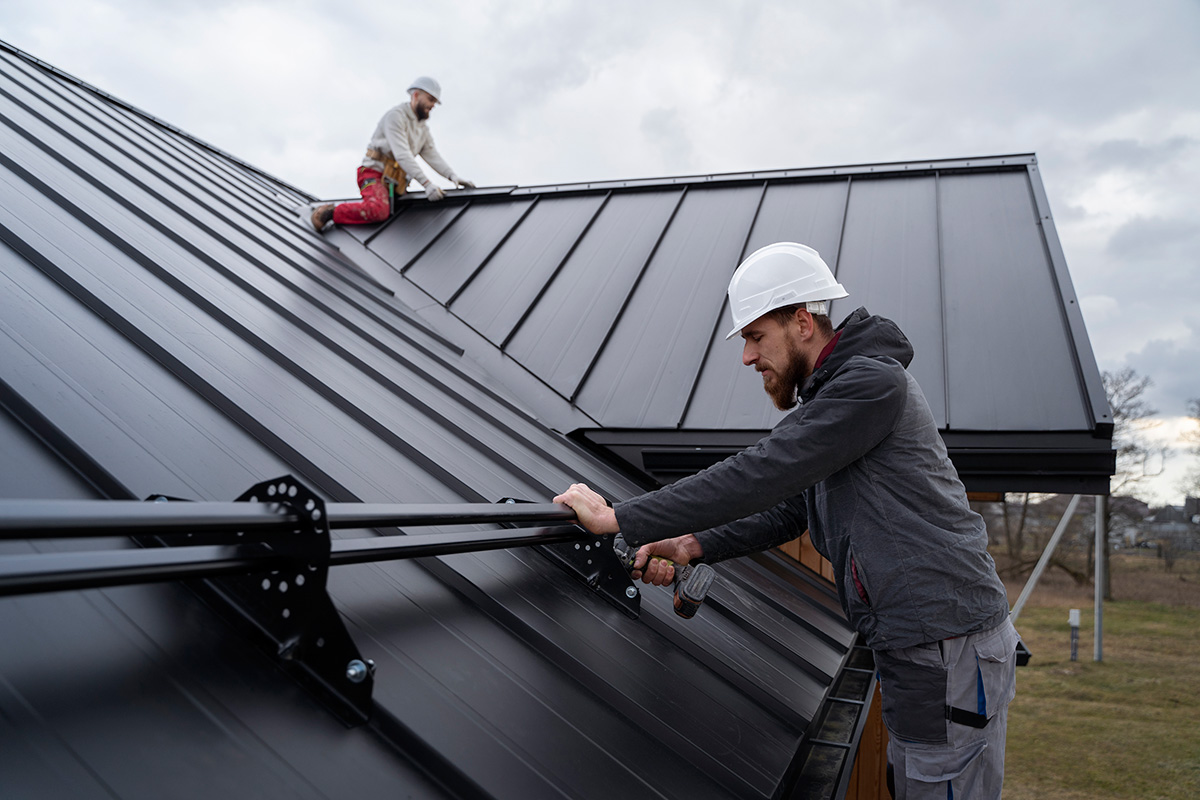
2. Metal Roofing
Metal roofs have become increasingly popular thanks to their durability and modern appearance.
Pros:
- Long lifespan (40–70 years).
- Highly resistant to wind, snow, and fire.
- Reflects sunlight, reducing cooling costs.
- Lightweight, reducing strain on the structure.
Cons:
- Higher upfront cost.
- May be noisy during rain or hail without proper insulation.
- Requires professional installation.
Best for: Homeowners in climates with heavy snow, storms, or high heat who want durability and efficiency.
3. Clay and Concrete Tiles
Clay and concrete tiles are classic, durable materials often associated with Mediterranean, Spanish, and Southwestern-style homes.
Pros:
- Extremely durable (50–100 years).
- Fire-resistant and weather-resistant.
- Distinctive, timeless appearance.
Cons:
- Very heavy — requires reinforced roof structure.
- Higher cost compared to shingles.
- Installation is labor-intensive.
Best for: Homes in hot, dry climates where longevity and style are top priorities.
4. Slate Roofing
Slate is one of the oldest and most durable roofing materials available. It’s often found on historic and luxury homes.
Pros:
- Exceptional lifespan (75–100+ years).
- Elegant, high-end appearance.
- Resistant to fire, rot, and pests.
Cons:
- Very expensive.
- Extremely heavy—structural reinforcement is usually required.
- Fragile if walked on.
Best for: Homeowners who want a premium, long-lasting roof and are prepared for the investment.
5. Wood Shingles and Shakes
Wood shingles and shakes offer natural beauty and rustic charm. Shingles are machine-cut, while shakes are hand-split for a rougher look.
Pros:
- Unique, natural aesthetic.
- Moderate lifespan (30–40 years with proper care).
- Can be eco-friendly if sourced sustainably.
Cons:
- Susceptible to fire, mold, and rot (unless treated).
- Requires regular maintenance.
- Not ideal for wet or humid climates.
Best for: Homes aiming for a rustic, traditional look in drier climates.
6. Synthetic Roofing Materials
Advances in technology have led to synthetic materials designed to mimic natural options like slate, wood, or tile.
Pros:
- Lightweight compared to natural counterparts.
- More affordable than slate or tile.
- Durable and weather-resistant.
- Often made from recycled materials.
Cons:
- Quality varies widely by manufacturer.
- Still relatively new, so long-term performance data is limited.
Best for: Homeowners who want the look of premium materials without the cost or weight.
Comparing Lifespan and Cost
| Material | Average Lifespan | Cost (per sq. ft. installed) |
|---|---|---|
| Asphalt Shingles | 20–25 years | $3 – $7 |
| Metal Roofing | 40–70 years | $8 – $14 |
| Clay/Concrete Tile | 50–100 years | $10 – $18 |
| Slate | 75–100+ years | $15 – $30 |
| Wood Shingles/Shakes | 30–40 years | $6 – $12 |
| Synthetic Materials | 30–50 years | $7 – $13 |
Note: Prices vary by region, brand, and installation complexity.
Energy Efficiency Considerations
- Cool roofs: Light-colored or reflective surfaces (metal, synthetic, or coated shingles) reflect sunlight and lower cooling costs.
- Insulation compatibility: Some roofing systems allow for extra insulation to improve efficiency.
- Ventilation: Regardless of material, proper attic ventilation is crucial to maximize lifespan and efficiency.
Choosing the Right Material for Your Home
When it comes down to it, the “best” roofing material is the one that balances your priorities:
- On a budget: Asphalt shingles are the most affordable option.
- For longevity: Slate or tile can last a century.
- For durability in harsh weather: Metal roofing stands strong against storms and snow.
- For eco-conscious homeowners: Consider synthetic or sustainably sourced wood.
- For style: Tile, slate, or wood can dramatically enhance curb appeal.
Final Thoughts
Your roof is more than a functional necessity — it’s an investment in your home’s safety, efficiency, and beauty. By weighing the pros and cons of different materials, considering your climate, budget, and long-term goals, you can make a choice that adds value and peace of mind.
Whether you opt for cost-effective asphalt, durable metal, timeless slate, or innovative synthetic materials, the most important step is proper installation and ongoing maintenance. With the right roofing material and care, you can protect your home for decades to come.