
When one load suddenly needs two or three drying cycles, the dryer is wasting time and energy. Slow drying often begins with an airflow problem, but heating parts, sensors, and washing habits can also contribute.
Table Of Content
Important: poor dryer airflow can increase fire risk. Stop using the appliance if you smell burning, see scorch marks, or notice the cabinet becoming unusually hot.
1. The Lint Screen Is Restricted
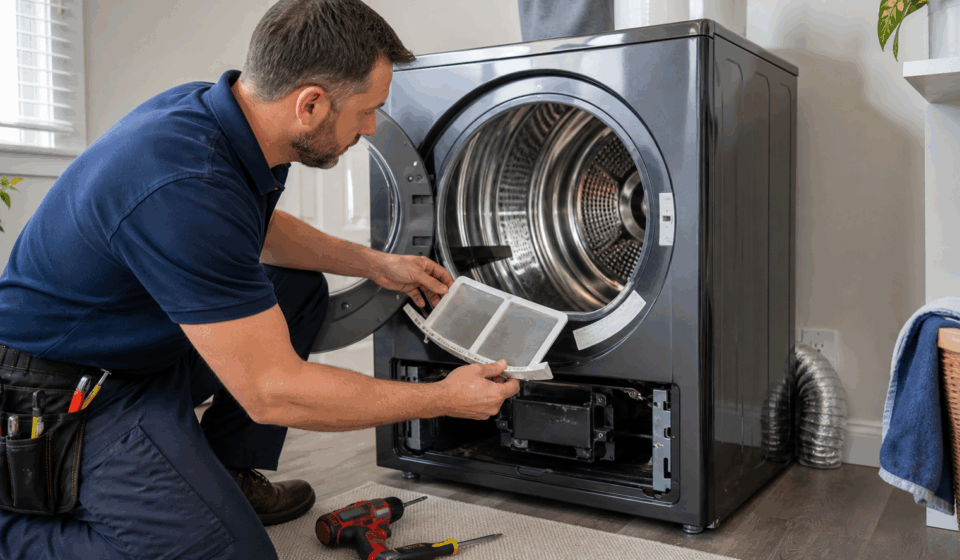
Clean the lint screen after every load. Fabric-softener residue can create an invisible film that blocks airflow even when the screen looks clean. Wash it gently with warm water and mild soap, allow it to dry fully, and reinstall it.
2. The Exhaust Vent Is Blocked
A crushed flexible duct, heavy lint buildup, or blocked exterior hood traps hot moist air inside the dryer. Check that the duct is not pinched and that the outside flap opens strongly during operation. Long or concealed vent runs should be professionally cleaned.
- Use rigid or semi-rigid metal ducting where permitted.
- Avoid plastic or thin foil ducts.
- Never operate the dryer with the vent disconnected indoors.
3. The Load Is Too Large
Clothes need room to tumble. A tightly packed drum prevents warm air from reaching all surfaces. Split large loads and separate heavy towels from lightweight items.
4. Clothes Enter the Dryer Too Wet
If the washer does not spin correctly, the dryer must remove far more water. Check whether clothing feels unusually heavy at the end of the wash cycle. A washer drainage or spin issue may be the true cause; see our guide on a washer that will not drain.
Describe the symptoms and check local dryer repair service availability before the problem gets worse.
5. The Moisture Sensors Are Dirty
Automatic cycles rely on sensor bars inside the drum. Dryer-sheet residue can prevent accurate readings. With the dryer unplugged, wipe the bars using the cleaning method recommended in the owner’s manual.
6. The Heating System Is Weak
An electric dryer may have a partially failed heating element, while a gas model can have weak igniter or valve components. Thermal fuses, thermostats, and control boards can also interrupt normal heat. These parts require professional testing.
7. The Room Is Too Cold
Some ventless and heat-pump dryers perform more slowly in very cold garages or utility rooms. Check the manufacturer’s required operating-temperature range and make sure the appliance has adequate clearance.
When to Schedule Dryer Repair
Call for service when the vent is clear but cycles remain unusually long, the dryer has no heat, the drum stops turning, or the machine overheats. A technician can measure airflow, temperature, and electrical performance without guessing.
Visit the appliance repair page to review covered services and connect with a local provider.
Final Takeaway
Clean the lint screen, inspect the vent, reduce load size, and confirm that the washer spins properly. If slow drying continues, have the heating system and safety controls tested before the problem becomes a breakdown or fire hazard.