
A floor coating can remain attractive for many years, but there is no universal lifespan. Resin type, film thickness, surface preparation, traffic, sunlight, moisture, chemicals, and maintenance all influence wear. A light-duty basement and a busy repair shop may use similar-looking coatings while placing completely different demands on them.
Table Of Content
What determines service life
- Bond to the substrate: mechanically prepared, sound concrete gives the coating a better foundation than a dusty or contaminated slab.
- System design: primers, build coats, broadcast aggregate, and protective topcoats must be compatible and applied at the intended thickness.
- Traffic: vehicle tires, pallet jacks, rolling loads, sand, and metal wheels wear a floor faster than normal foot traffic.
- Exposure: sunlight, road salt, solvents, battery acid, heat, and standing water can change color or degrade an unsuitable coating.
- Movement: cracks and joints may transfer through a rigid finish as the building or slab moves.
Routine cleaning
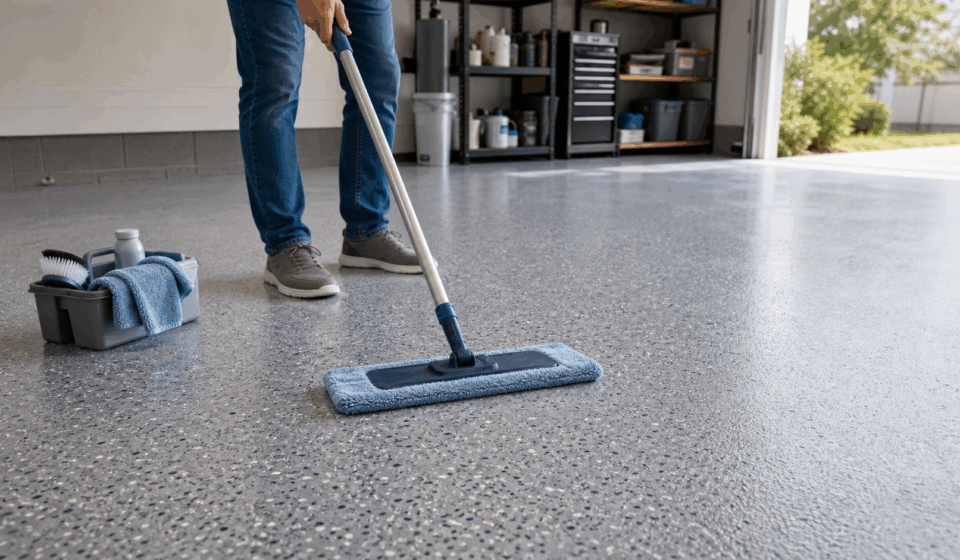
Remove abrasive grit before it is ground into the finish. Sweep with a soft broom, dust mop, or suitable vacuum, then damp mop with a neutral cleaner recommended for the coating. Avoid highly alkaline cleaners, unknown solvents, and abrasive pads unless the manufacturer approves them. Rinse residue that could leave the surface dull or slippery.
Respond to spills quickly
Even chemical-resistant coatings have limits. Wipe up gasoline, oil, brake fluid, cleaners, dyes, and other spills promptly, then clean according to the product guidance. Long exposure can soften, stain, or discolor a surface that would tolerate a short contact. Use containment mats under equipment or vehicles known to leak.
Protect high-wear areas
Place clean, non-staining mats at entrances to capture sand and water. Use pads under metal shelving and heavy equipment. Avoid dragging sharp objects across the floor, and check that chair casters or cart wheels are clean and compatible. In garages, allow hot tires and newly coated surfaces the full cure time before parking.
Inspect the floor
A quarterly inspection can catch small problems early. Look at thresholds, drains, turns, workstations, tire paths, and sunny areas. Note loss of gloss, scratches, pinholes, chips, lifting edges, or cracks. A worn topcoat can often be cleaned, lightly abraded, and recoated before the decorative or base layer is damaged.
Repair small chips and scratches
Clean the damaged area, remove loose material, and feather or abrade the surrounding finish as directed. Use a compatible repair resin—not an unknown hardware-store product that may reject the future topcoat. Color and gloss can vary between batches, so visible areas may require a larger blended repair or a full maintenance coat.
When recoating is better than spot repair
A maintenance topcoat is appropriate when the coating remains firmly bonded but shows widespread dullness or fine wear. The old surface must be thoroughly cleaned and given the profile required for intercoat adhesion. If large areas are peeling or moisture is present, covering the problem will not solve it; investigate the substrate and remove failed material.
Warning signs that need professional evaluation
- Bubbles or whitening that return after damp weather
- Peeling that exposes smooth or contaminated concrete
- Cracks that widen, change height, or leak water
- Soft coating after chemical exposure
- Repeated tire-path delamination
- Widespread loss of adhesion between layers
The most economical maintenance plan is simple: keep grit and chemicals off the surface, protect concentrated loads, inspect regularly, and refresh the topcoat before wear reaches the base system. Keep product names and installation records so future repairs can use compatible materials.