
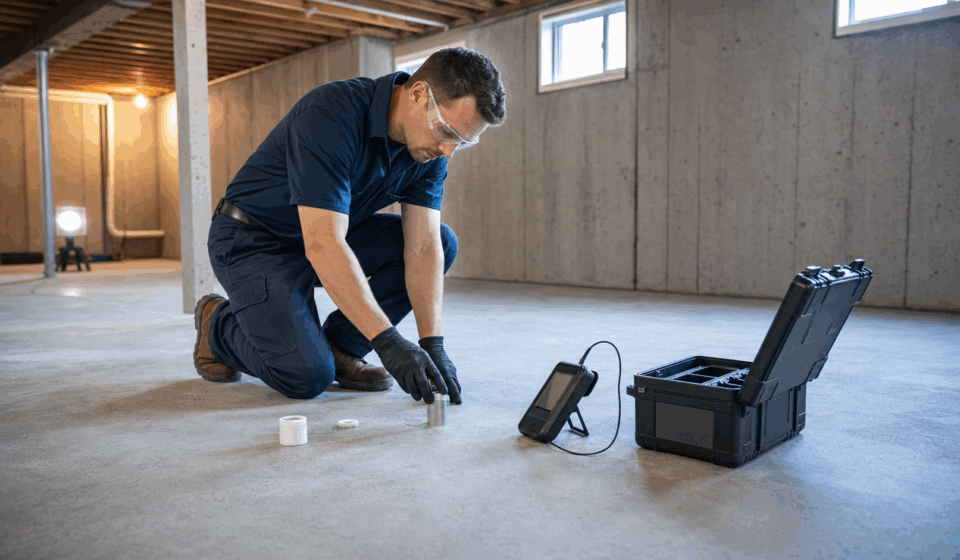

Basement floors need a different coating strategy than many above-grade rooms. Concrete can transmit moisture vapor even when the surface looks dry, and a coating may trap that moisture. The result can be bubbles, cloudy patches, mineral deposits, or complete loss of adhesion. Choosing a basement coating starts with water management and testing—not with color.
Table Of Content
Find the moisture source
Look for plumbing leaks, foundation seepage, poor grading, clogged gutters, condensation, and seasonal changes. Dark areas at walls or cracks, musty odors, and white mineral deposits are warning signs. A coating is not waterproofing for an active leak. Correct exterior drainage, plumbing, or foundation problems before installing a decorative finish.
Test the concrete
Simple plastic-sheet checks may reveal obvious condensation, but they do not replace the test specified by a coating manufacturer. Relative-humidity testing within the slab or other approved methods provide better information for product selection. Record conditions during the damp season when possible, because one dry-day reading may not represent the slab year-round.
Coating options
- Moisture-tolerant epoxy primer: a specialty primer can be used when test results fall within its published limits. It may serve as the foundation for epoxy, flake, or other compatible topcoats.
- Breathable mineral coating: certain silicate or mineral systems allow more vapor movement and may be suitable when a film-forming resin is inappropriate. Their appearance and stain resistance differ from high-build epoxy.
- Concrete stain with a compatible sealer: this can create a decorative look with less build, but the sealer still needs to match moisture conditions.
- Penetrating sealer: a non-film treatment can reduce absorption while preserving a natural appearance. It will not provide the seamless, glossy finish of a resin coating.
When standard epoxy is appropriate
Epoxy can work well in a dry, stable basement after moisture testing and preparation. It creates a smooth surface that is easy to clean and can brighten a low-light room. Use a system designed for concrete floors, not ordinary wall paint. If sunlight reaches the floor through doors or windows, consider a color-stable topcoat in exposed areas.
Preparation in occupied homes
Basement preparation may generate noise and fine dust, so use grinding equipment connected to effective dust collection and isolate the work area from living spaces. Remove adhesive, paint, efflorescence, and weak concrete. Repair cracks with compatible materials, while recognizing that moving cracks may reappear through a rigid finish.
Slip resistance and comfort
Basements may contain laundry areas, mechanical equipment, or exterior entrances. Add appropriate traction where water is possible, but avoid an excessively rough texture that traps lint and dirt. Coatings do not make concrete warm; area rugs, mats, or a separate insulated flooring system may be better for living areas where comfort is the main goal.
Questions before installation
- Has every active water source been corrected?
- What moisture test does the coating manufacturer require?
- Does the measured result fall within the primer and topcoat limits?
- Will the space need a low-odor or low-emission installation plan?
- How will floor drains, wall joints, cracks, and utility penetrations be detailed?
- How long must the basement remain ventilated and out of service?
The best basement floor coating is the one compatible with the slab’s actual moisture behavior. Testing and drainage repairs may feel less exciting than choosing a finish, but they protect the entire project. If moisture remains uncertain, consult a qualified flooring or concrete professional before installing a vapor-tight coating.