
A floor coating is a protective system bonded directly to concrete or another prepared surface. It can make a worn floor easier to clean, more attractive, and more resistant to stains, abrasion, moisture, and chemicals. The best result, however, depends on matching the coating to the room, the condition of the substrate, and the way the floor will be used.
Table Of Content
What a floor coating does
Unlike tile, carpet, or floating flooring, a coating becomes part of the surface. Most systems include a primer or base coat, an optional decorative layer, and a protective topcoat. The finished thickness can range from a thin sealer to a high-build industrial system. A coating will not repair a weak slab by itself, so cracks, contamination, and moisture problems must be addressed first.
Common types of floor coatings
- Epoxy: a durable, high-build option with strong adhesion and many color or flake choices. It is widely used in garages, workshops, basements, and commercial interiors.
- Polyurethane: a flexible, abrasion-resistant topcoat that holds color and gloss well. It is often installed over epoxy rather than used as the only layer.
- Polyaspartic and polyurea: fast-curing systems that can return a space to service quickly. Many formulas resist ultraviolet light better than standard epoxy.
- Acrylic coatings and sealers: economical products for light-duty areas. They are easier to refresh but usually do not match the build or chemical resistance of resin systems.
- Penetrating concrete sealers: treatments that reduce water or salt absorption without creating a thick film. They are useful where a natural concrete appearance is preferred.
Match the product to the space
Start with the expected traffic and exposure. A residential utility room may need stain resistance and easy cleaning, while a garage must also handle hot tires, road salt, tools, and vehicle fluids. A retail or warehouse floor may require higher abrasion resistance, slip-control aggregate, and clearly marked traffic zones. Outdoor areas need a product specifically rated for sunlight, temperature changes, and wet conditions.
Check the concrete before choosing
The concrete must be structurally sound, clean, and dry enough for the selected system. New slabs need adequate curing time. Older slabs may contain oil, curing compounds, paint, or moisture vapor that prevents adhesion. Professional installers often test moisture and mechanically grind the surface to create a reliable profile. Skipping these steps is one of the most common causes of peeling.
Appearance and safety options
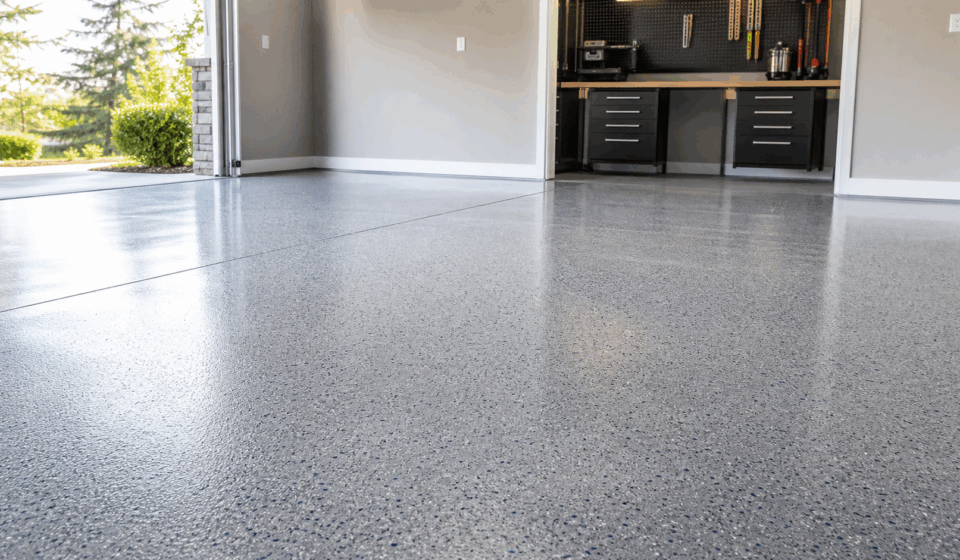
Coatings can be solid color, metallic, quartz-filled, or decorated with vinyl flakes. Glossy finishes reflect more light and look polished, but they may show dust or scratches sooner. Fine aggregate can add traction in wet or sloped areas. Choose texture carefully: too little can be slippery, while too much can make mopping difficult.
A practical selection checklist
- Where will the coating be installed, and is the area indoors or outdoors?
- What traffic, chemicals, heat, water, and sunlight will reach the floor?
- Does the slab have cracks, oil stains, previous coatings, or moisture concerns?
- How much downtime is available for preparation, curing, and return to service?
- Is easy cleaning, decorative appearance, slip resistance, or maximum durability the main priority?
The bottom line
There is no single best floor coating for every project. A successful system combines the right chemistry with thorough surface preparation, compatible layers, and realistic expectations. Compare complete systems rather than choosing only by color or price, and follow the manufacturer’s limits for moisture, temperature, recoat timing, and curing.